

Dry Creek and Swale Design and Installation Services in Madison, MS
Dry creeks and swales provide a natural, highly effective solution for managing surface water while enhancing the visual character of the landscape. In Madison and throughout the greater Jackson metro area, heavy rainfall combined with clay-rich soils can lead to runoff, erosion, and water pooling when surface drainage is not properly managed.
Our dry creek and swale systems are engineered as part of a comprehensive surface water management strategy, designed to intercept, convey, and control runoff across the property. These systems are frequently integrated with catch basins and culverts to collect concentrated surface flows and transition water efficiently through defined conveyance points. Constructed using natural stone and proven installation methods, dry creeks and swales provide durable, low-maintenance solutions that blend seamlessly into the surrounding landscape.
Where subsurface water is present, dry creeks and swales are strategically paired with French drain systems to create a unified drainage network. French drains manage groundwater below grade, while surface runoff is directed through swales, dry creeks, and connected catch basins or culverts for controlled discharge. This integrated approach allows water to be captured, transferred, and released away from foundations, low-lying areas, and vulnerable landscape features—delivering long-term drainage performance for residential and commercial properties throughout
Ridgeland,
Flowood,
Brandon,
Gluckstadt, and the greater Jackson, Mississippi metro area.
Natural Surface Water Management Solutions
Dry creeks and swales are engineered landscape features designed to manage surface runoff by slowing water velocity, redirecting excess moisture, and encouraging controlled absorption. Unlike subsurface drainage systems, these solutions function visibly at the surface, making them especially effective in areas where water movement is clearly observed during heavy rainfall events.
Both systems are commonly used to:
- Control surface runoff and regulate water flow paths
- Reduce erosion and soil displacement caused by uncontrolled drainage
- Prevent standing water in low-lying or poorly draining areas
- Protect nearby structures, plantings, and hardscape elements from water-related damage
When
properly designed and integrated, dry creeks and swales convert drainage challenges into durable, functional, and visually compelling landscape features that enhance both performance and curb appeal.
Dry Creeks vs. Swales: Understanding the Difference
Dry Creeks
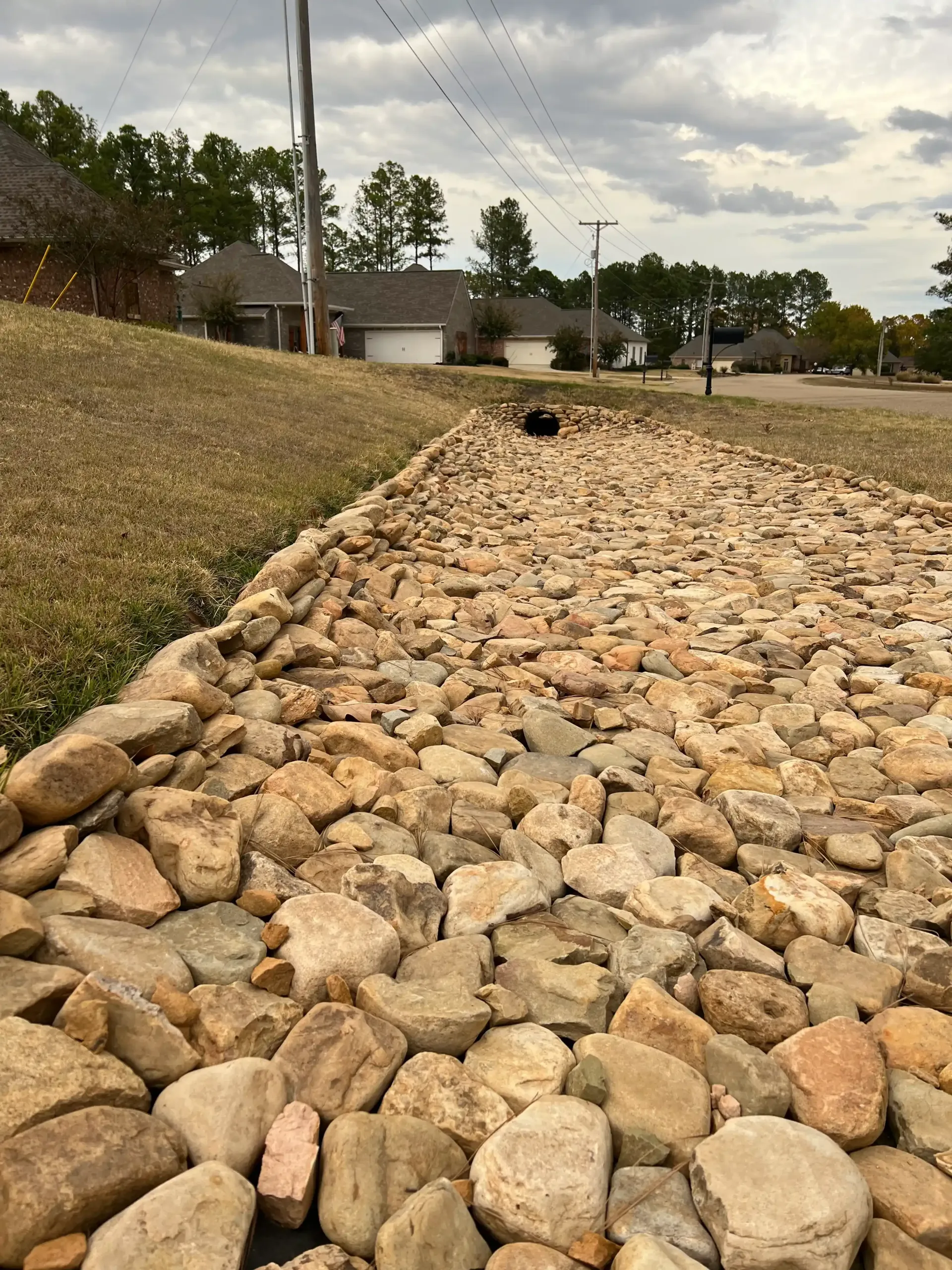
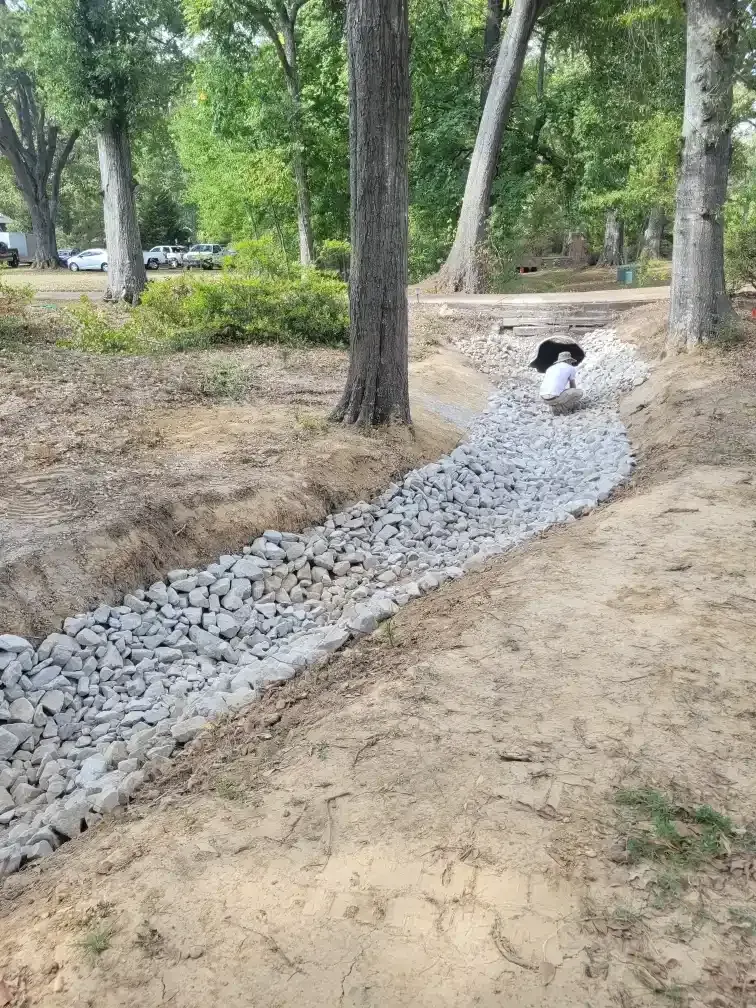
Dry creeks are rock-lined channels designed to resemble natural stream beds. They redirect runoff during rainfall events while remaining dry most of the time, making them both functional and decorative.
Dry creeks are ideal for:
- Managing visible runoff across sloped areas
- Reducing erosion along natural drainage paths
- Blending drainage solutions into landscape design
- Creating a visually appealing focal point
Constructed using river stone, field stone, gravel, and native plantings, dry creeks slow water flow and protect surrounding landscape features while enhancing curb appeal.
Swales
Swales are shallow, vegetated channels engineered to guide stormwater while encouraging filtration and groundwater recharge. They are often planted with native grasses and vegetation that stabilize soil and improve drainage performance.
Swales are commonly used to:
- Manage broad surface runoff areas
- Prevent erosion across lawns and open spaces
- Protect foundations and structures
- Support eco-friendly water management
Swales provide an effective balance of function and sustainability, especially in properties prone to widespread water movement during heavy rains.
Site Evaluation & Drainage Assessment
Every dry creek or swale project begins with a thorough site evaluation. We assess:
- Existing drainage patterns
- Soil composition
- Property contours and slope
- Areas prone to pooling or erosion
This evaluation allows us to determine whether a dry creek, a swale, or a combination of surface drainage solutions will deliver the best long-term results for your property.
Custom Design & Planning
Dry Creek Design Considerations
- Strategic channel placement and engineered slope to ensure controlled water conveyance
- Proper stone sizing, layout, and layered construction for durability, flow efficiency, and visual balance
- Thoughtful integration with existing landscape features, hardscapes, and natural contours
- Seamless transition to French drains, catch basins, or other drainage systems when required
Swale Design Considerations
- Engineered channel depth and width based on runoff volume and site conditions
- Precise soil grading and stabilization to support consistent water movement and prevent erosion
- Selection of native and adaptive plantings to enhance filtration, slow runoff, and reinforce visual appeal
- Compatibility with surrounding landscaping to maintain a cohesive, natural appearance
Each design is custom-engineered to reflect your property’s unique layout, drainage demands, and long-term water management needs.
Professional Installation & Landscape Integration
Installation is executed with precision to ensure proper water flow, structural stability, and long-term performance. Each system is constructed with a disciplined, process-driven approach that prioritizes both function and appearance, including:
- Precise excavation methods that minimize disruption to existing landscape features
- Proper soil preparation and grading to support controlled water movement and system longevity
- Strategic placement of stone, vegetation, and materials to optimize drainage performance while enhancing visual appeal
- Seamless integration with existing trees, planting beds, and hardscape elements for a natural, cohesive finish
Upon completion, all disturbed areas are carefully restored to preserve the overall appearance, balance, and functionality of the landscape—ensuring the drainage system performs effectively while blending naturally into its surroundings.
Maintenance Guidance & Long-Term Performance
Dry creeks and swales are low-maintenance when properly designed, but periodic observation is important. We provide guidance on:
- Monitoring water flow after heavy rainfall
- Clearing debris or sediment buildup
- Maintaining vegetation for optimal performance
We remain available for follow-up support to ensure your system continues to function as intended.
Why Dry Creeks & Swales Matter in Madison, MS
Madison and the greater Jackson metro area experience frequent heavy rainfall combined with soil conditions that limit natural drainage. Without properly engineered surface water management, uncontrolled runoff can lead to erosion, landscape failure, and long-term property damage.
Dry creeks and swales provide a technically sound drainage solution specifically designed for local conditions, while also serving as a visually striking landscape feature. When properly engineered and constructed, these systems manage surface runoff efficiently while enhancing the form, texture, and natural character of the outdoor space—protecting the landscape without sacrificing curb appeal.
Request a Dry Creek or Swale Evaluation
If your property experiences surface runoff, erosion, or standing water during heavy rainfall, a professional site evaluation is the first step toward a durable, engineered drainage solution. Effective water management requires a coordinated approach that accounts for surface flow, grading, and subsurface conditions—not a single feature applied in isolation.
Call today to schedule a dry creek or swale evaluation and discuss how integrated drainage solutions, including surface conveyance, French drains, and catch basins, can be designed to manage runoff and protect your property in Madison and the Greater Jackson metro area.
Frequently Asked Questions About Dry Creek & Swale Design
🔸 What is a dry creek and how does it work?
A dry creek is a surface water management feature designed to guide stormwater runoff through a defined, landscaped channel. It mimics the function of a natural streambed, directing excess surface water away from vulnerable areas during rainfall while remaining dry most of the time. In addition to managing runoff, dry creeks can enhance the visual character of a landscape.
🔸 What is the difference between a dry creek and a swale?
Dry creeks are typically rock-lined channels designed to manage visible surface runoff and convey water efficiently during heavy rain.
Swales are shallow, gently sloped channels that are often vegetated and designed to slow water flow, encourage absorption, and reduce runoff velocity. Both are effective surface drainage solutions, with the appropriate option determined by grading, soil conditions, and water movement patterns.
🔸 What materials are used to construct dry creeks and swales?
Dry creeks commonly incorporate river stone, field stone, gravel, and boulders selected for durability and flow capacity. Swales rely on carefully graded soil profiles, native grasses, and vegetation. Both systems may include plantings chosen to stabilize soil and support long-term performance.
🔸 How do dry creeks and swales help with erosion control?
By slowing water movement and directing runoff along a controlled path, dry creeks and swales reduce soil displacement, limit erosion, and help protect surrounding landscape features during heavy rainfall events.
🔸 Do dry creeks and swales require a lot of maintenance?
When properly designed and installed, both systems are low-maintenance. Periodic inspection after heavy rain and occasional debris removal help ensure continued performance. Vegetated swales may also require routine plant care to maintain healthy growth and soil stability.
🔸 Can plants be incorporated into dry creeks and swales?
Yes. Native plants and grasses are often incorporated to stabilize soil, enhance appearance, and support local ecosystems. Plant selection is based on expected water exposure, soil conditions, and overall landscape design goals.
🔸 Are dry creeks and swales suitable for all landscapes?
Dry creeks and swales can be adapted to a wide range of residential and light commercial landscapes. Proper design ensures these features complement both natural and modern landscape styles while effectively managing surface water.
🔸 How long does dry creek or swale installation take?
Most dry creek or swale installations are completed within one to three days, depending on project size, design complexity, and site conditions. Larger or more detailed installations may require additional time to ensure proper grading and integration.
🔸 Do you install dry creeks and swales in the Jackson metro area?
Yes. We provide dry creek and swale design and installation services throughout Madison, MS, as well as Ridgeland, Flowood, Brandon, Gluckstadt, and the Greater Jackson, MS metro area.