

Storm Drain, Culvert, and Catch Basin Installation Services in Madison, MS
Storm drains, culverts, and catch basins are essential components of effective surface water management, particularly in regions subject to heavy rainfall and limited soil infiltration. In Madison, MS and across the Greater Jackson metro area, clay-heavy soils significantly restrict natural absorption, causing stormwater to accumulate rapidly during intense rain events. Without properly designed drainage infrastructure, this excess surface water can overwhelm natural flow paths, leading to persistent flooding, erosion, sediment displacement, and increased stress on foundations and paved surfaces.
Our storm drain, culvert, and catch basin installation services are engineered as part of an integrated drainage and water management strategy, not as isolated fixes. Each system is carefully designed to intercept surface runoff at key collection points, regulate flow volume, and convey stormwater through controlled pathways to a safe discharge location. By managing water movement at both the collection and conveyance stages, these systems help reduce hydraulic pressure near structures and prevent water from migrating into vulnerable areas.
Properly designed storm drainage systems protect foundations, driveways, access roads, parking areas, and landscaped features by maintaining predictable water flow during heavy rainfall. Catch basins capture runoff and debris before it enters the drainage network, while culverts provide uninterrupted water passage beneath driveways, walkways, and access points without compromising structural stability or usability. When combined, these components create a reliable surface water management system capable of performing under peak storm conditions.
We provide professional storm drainage solutions for
residential and commercial properties, working with homeowners, builders, and property managers throughout
Madison, Ridgeland, Flowood, Brandon, Gluckstadt, and the Greater Jackson, MS metro area. Every project is approached with a focus on long-term performance, site-specific conditions, and compatibility with existing drainage infrastructure to deliver durable solutions that protect both property and landscape over time.
Storm Drain & Surface Water Management Solutions
Storm drainage systems are designed to handle high volumes of surface runoff during heavy rainfall. These systems work by collecting water at strategic points and directing it through underground piping, culverts, or open conveyance paths to a safe discharge location.
Key benefits of properly designed storm drainage systems include:
- Reduced surface flooding
- Protection of foundations and hardscapes
- Prevention of soil erosion
- Improved long-term landscape performance
Catch basins and culverts function together within these systems to control both water flow and debris.
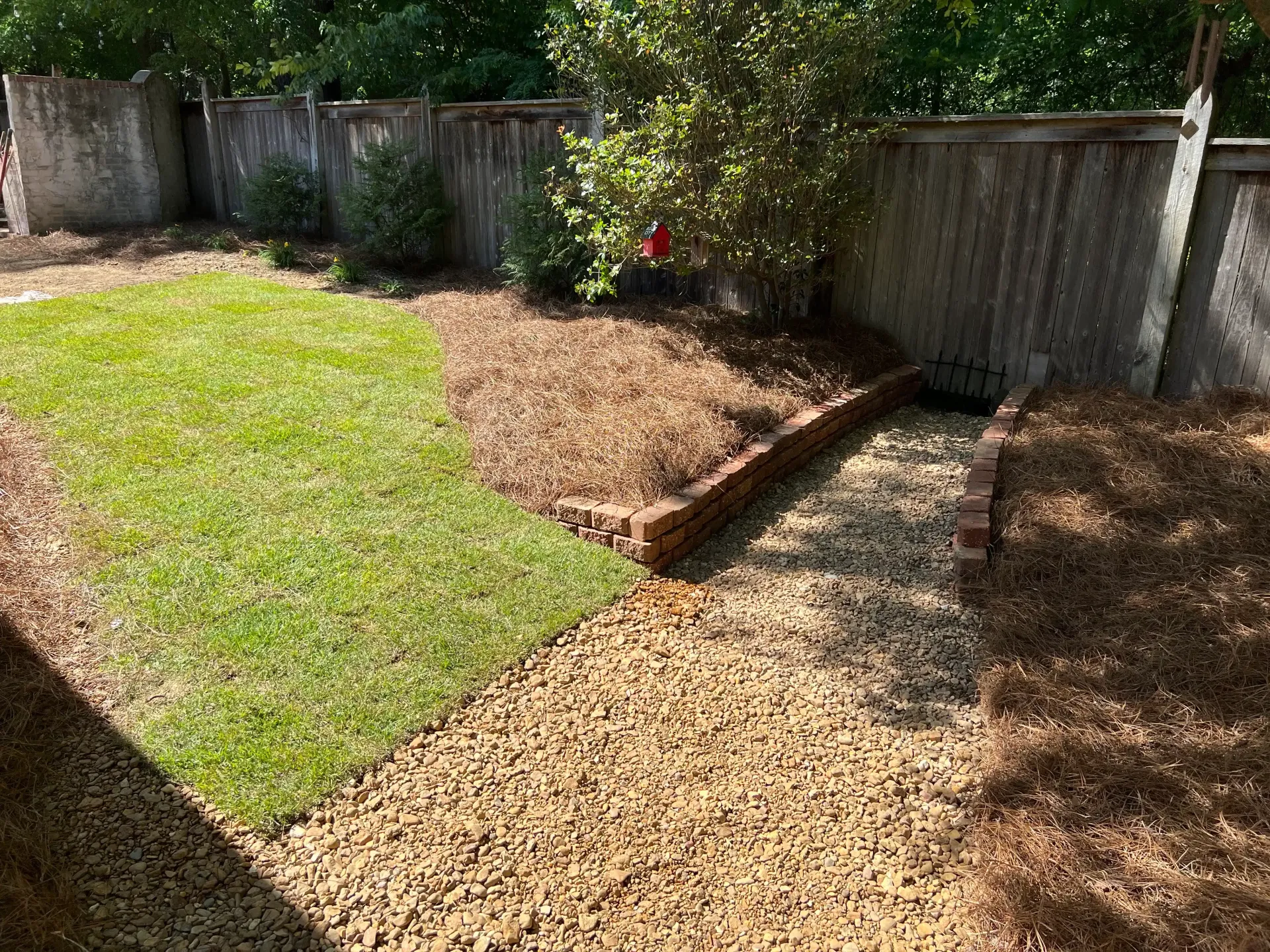
Understanding Catch Basins
What Is a Catch Basin?
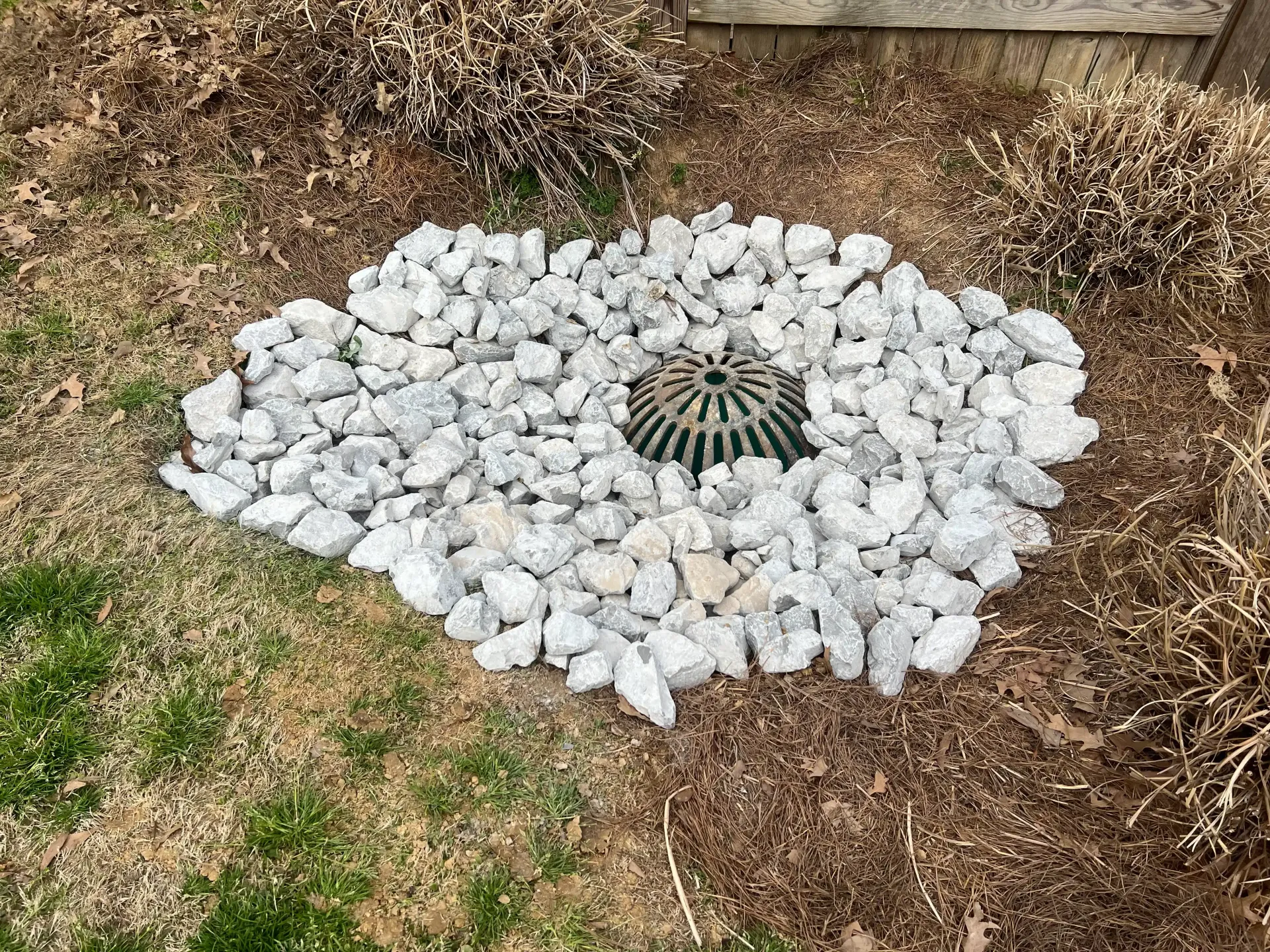
A catch basin is a collection structure installed at low points where surface water naturally accumulates. As water enters the basin, debris and sediment settle at the bottom before the water flows into the connected drainage system.
Catch basins are commonly used to:
- Collect surface runoff
- Prevent standing water
- Filter debris before water enters pipes
- Reduce erosion and soil saturation
They are an essential component of many storm drain systems, especially in residential and light commercial settings.
Understanding Storm Drains & Culverts
Storm Drains
Storm drains are the conveyance system that moves collected water away from your property. This may include underground piping, open channels, or integrated drainage pathways designed to handle large volumes of runoff efficiently.
Culverts
Culverts are structural drainage components that allow stormwater to pass beneath driveways, walkways, or landscape features. They are commonly used where storm drains must cross under access points while maintaining proper water flow.
Culverts are often paired with:
- Catch basins
- Channel drains
- Open stormwater pathways
Together, these elements ensure uninterrupted water movement without compromising access or structural integrity.
Site Evaluation & Drainage Assessment
Every storm drain, culvert, or catch basin installation begins with a detailed site evaluation. This assessment allows us to design a solution based on actual site conditions rather than assumptions.
Our evaluation includes:
- Drainage patterns and runoff volume
- Soil composition and absorption characteristics
- Property grading and slope
- Existing drainage infrastructure and discharge points
This process determines whether a catch basin, storm drain, culvert, or
integrated system will deliver the most effective
long-term performance
for your property.
Custom Design & Planning
Based on our assessment, we design a stormwater solution tailored to your property. Design considerations include:
- Catch basin size and placement
- Pipe diameter and slope
- Culvert sizing and alignment
- Connection to existing drainage systems
- Integration with other water management solutions
Each design prioritizes performance, durability, and compatibility with surrounding landscape features.
Professional Installation & Long-Term Performance
Installation is performed using proven methods and high-quality materials to ensure proper water flow and system longevity. Our process emphasizes:
- Precise excavation and grading
- Secure connections between components
- Minimal disruption to existing landscaping
- Clean restoration of affected areas
Proper installation is critical to preventing clogs, backups, and system failure during heavy rainfall.
Request a Drainage Consultation
If you are experiencing surface flooding, standing water, erosion, or recurring drainage failures, a professional evaluation is the first step toward identifying the root cause and implementing a durable, long-term solution. These issues are often caused by unmanaged runoff, inadequate surface collection, or drainage systems that are undersized or improperly routed for current site conditions.
A comprehensive storm drainage and water management consultation allows us to evaluate how water moves across and through your property during heavy rainfall events. By assessing grading, soil conditions, runoff patterns, and existing drainage infrastructure, we can determine whether storm drains, catch basins, culverts, or an integrated drainage system will provide the most effective protection for your property.
Call today to schedule a storm drainage and water management consultation and discuss site-specific drainage solutions with a knowledgeable professional serving Madison and the surrounding area.
Frequently Asked Questions About Storm Drains, Culverts, and Catch Basins
🔸 What is a catch basin and how does it work?
A catch basin is a surface water collection structure installed at low points where runoff naturally accumulates. It captures stormwater while allowing debris and sediment to settle before water enters the connected drainage system, helping reduce surface flooding, erosion, and the risk of clogged pipes.
🔸 What is the difference between a catch basin and a storm drain?
A catch basin collects surface water and debris at specific collection points, while a storm drain is the conveyance system that transports collected water away through underground piping, culverts, or open pathways. Catch basins typically function as part of a larger storm drainage system rather than as standalone solutions.
🔸 How do culverts relate to storm drain systems?
Culverts are structural drainage components that allow stormwater to pass beneath driveways, walkways, or landscaped areas. Within a storm drainage system, culverts maintain uninterrupted water flow where drainage must cross access points, grade changes, or terrain features.
🔸 Why should I install a catch basin or storm drain on my property?
A properly designed storm drainage system helps manage excess runoff during heavy rainfall, reduce standing water, limit erosion, and protect foundations, hardscapes, and landscaping from water-related damage. These systems are especially important on properties where natural drainage is limited or runoff concentrates in specific areas.
🔸 How are catch basins, storm drains, and culverts installed?
Installation begins with a professional site evaluation to assess drainage patterns, runoff volume, grading, and soil conditions. Based on this assessment, proper placement, sizing, and slope are determined before excavation, installation, and final restoration of surrounding landscape areas.
🔸 How do I know if my catch basin or storm drain needs maintenance?
Signs that maintenance may be needed include water pooling near the basin, slow drainage during rainfall, or visible debris accumulation. Periodic inspection and debris removal help maintain proper flow and support long-term system performance, particularly after heavy storms.
🔸 Can I install a catch basin or storm drain myself?
While some components may appear straightforward, improper installation can lead to poor drainage performance, backups, erosion, or structural issues. Professional design and installation help ensure correct placement, sizing, and integration with the overall drainage system.
🔸 What materials are used for catch basins, storm drains, and culverts?
Catch basins and storm drain components are commonly constructed from concrete, high-density plastic, or composite materials. Culverts may be made from reinforced plastic or metal, depending on load requirements, site conditions, and water flow demands.
🔸 What areas do you serve for storm drain and catch basin installation?
We provide storm drain, catch basin, and culvert installation services throughout Madison, MS, as well as Ridgeland, Flowood, Brandon, Gluckstadt, and the Greater Jackson, MS metro area.